
Contractor License School
Table of Contents
Navigating Contractor Licensing in Colorado
Navigating the world of contracting in Colorado can feel overwhelming, especially with varying regulations across municipalities and the absence of a statewide general contractor license. As aspiring contractors grapple with these complexities, a reliable contractor license school in Colorado becomes essential for building credibility, accessing larger projects, and ensuring compliance. At Contractors of Colorado, we understand the challenges of meeting Colorado contractor license requirements, which often include specialty licenses regulated by the Colorado Department of Regulatory Agencies (DPO) and local mandates in cities like Denver and Colorado Springs.
While the DPO oversees more than 60 professions without mandating a broad general license, contractors must secure specific endorsements for trades like plumbing or electrical work. For residential projects, preparing for the ICC F13 exam is a key step, and our verified training programs provide focused ICC F13 exam study material to help you succeed. These licensing preparation courses in Colorado address common barriers, such as understanding application processes and exam readiness, drawing from official DPO guidelines to verify eligibility and promote consumer protection.
Consider John, a local builder who transformed his small operation into a thriving business after completing our contractor certification training resources–he now bids on high-value renovations with confidence. We at Contractors of Colorado specialize in guiding you through this journey with tailored programs that lead to exam success and professional growth.
Ready to take the next step? Enroll in our prep courses today to demystify the requirements and position yourself for success. In the following sections, we’ll dive deeper into Colorado’s specific rules to help you get started.
Key Requirements for Colorado Contractor Licenses
Colorado’s contractor licensing landscape requires careful navigation to ensure compliance and project success. We at Contractors of Colorado understand the complexities of these regulations and offer tailored support through our verification and education services. This section outlines the essential general contractor exam prep and other requirements to help professionals meet state and local standards efficiently.
Statewide and Specialty License Basics
In Colorado, there is no statewide general contractor license, but state licensing criteria for contractors focus on specialized trades through the Department of Regulatory Agencies (DORA) Division of Professions and Occupations (DPO). For instance, electrical and plumbing contractors must obtain specific licenses, which involve passing exams, providing proof of experience, and submitting background checks. The Colorado contractor license requirements typically include four years of practical experience or equivalent education, along with fees starting at $100 for applications and $50 annually for renewals.
Key documentation includes a completed application form, financial statements showing solvency, and liability insurance proof of at least $300,000. Common pitfalls include overlooking continuing education mandates, which require 24 hours every three years for most specialties. We recommend verifying all details via DORA’s portal to avoid delays.
As a leading contractor license school in Colorado, we provide comprehensive training to streamline this process, ensuring candidates are well-prepared for exams and compliant from day one.
Municipal and Local Licensing in Major Cities
While state oversight covers specialties, municipal licenses add layers of local compliance, particularly in urban centers like Denver and Colorado Springs. In Denver, contractors must register with the Department of Community Planning and Development, involving a business license application, zoning verification, and fees around $150. Colorado Springs requires building permits for projects over $500, with contractors needing to demonstrate state credentials if applicable.
Other areas, such as Arapahoe County, emphasize verification steps like insurance certificates and contractor affidavits, as outlined in their licensing guidelines. A simple comparison highlights the differences:
- State vs. Local: State focuses on trade exams and experience (DPO-managed); local adds registration and permits (city/county-specific).
- State vs. Local: Renewal is annual at state level; locals may require biennial updates with project bonds.
We warn against skipping these local steps, as fines can exceed $1,000. Our verification services help confirm municipal rules in Denver or Colorado Springs, saving time and reducing risks.
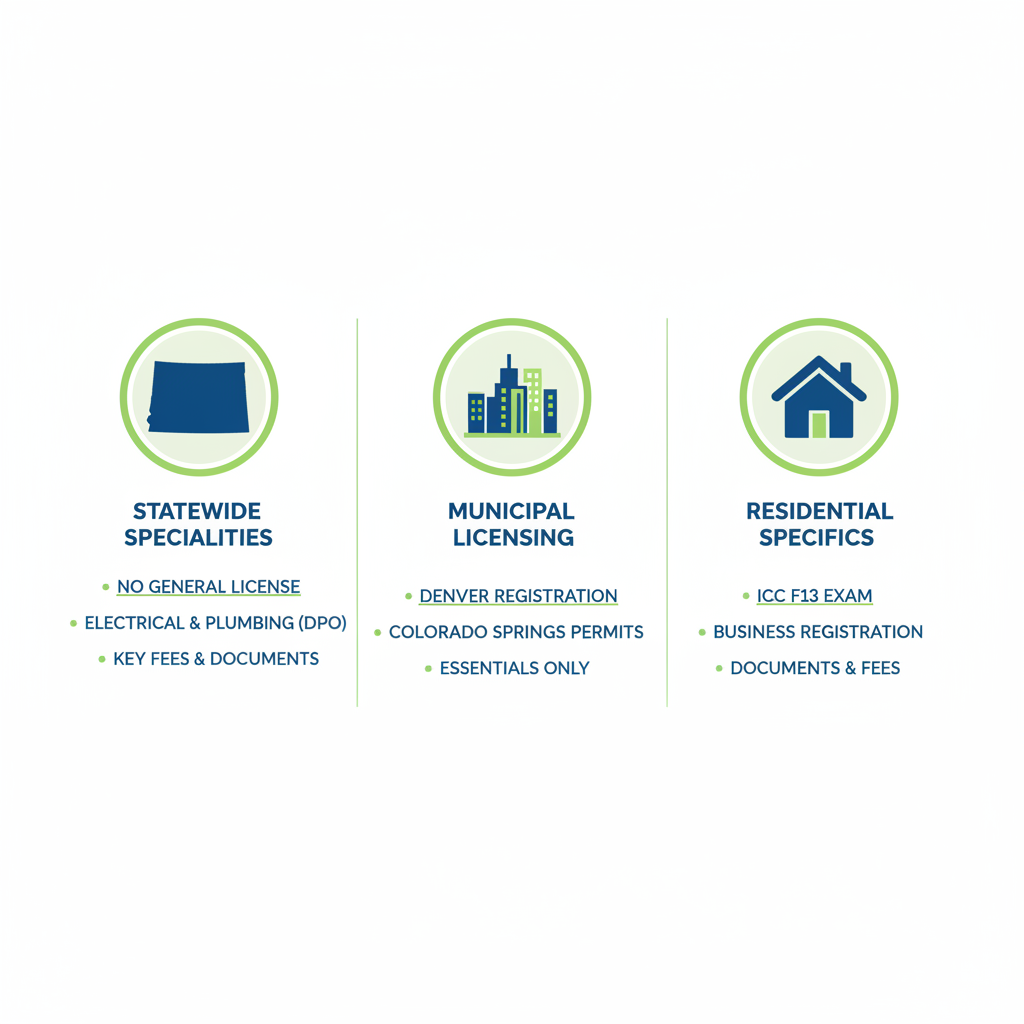
Overview of essential Colorado contractor licensing requirements
This visual aid summarizes the layered requirements, reinforcing the need for thorough preparation. Building on these local nuances, professionals can better align their operations with Colorado’s regulatory framework.
Residential Contractor Specifics and ICC F13 Overview
For residential work, Colorado mandates registration with the state for contractors handling projects valued over $500, emphasizing business setup and exam proficiency. Requirements include forming an LLC or corporation, obtaining a $50,000 surety bond, and passing relevant tests. The ICC F13 exam, based on the International Residential Code, tests knowledge of building standards and is a key hurdle for many.
Application steps involve submitting entity documents, proof of insurance, and exam scores to DORA, with initial fees of $90 plus exam costs around $200. NAHB credentials complement this by offering pathways like the Certified Graduate Builder, which align with ICC standards through structured study.
Effective ICC F13 exam study material and resources are crucial; we provide exam preparation resources for ICC F13 that cover code interpretations and practical scenarios, drawing from national benchmarks to boost pass rates.
Understanding these residential specifics positions you for success in Colorado’s Trusted Construction Community. Enroll in our programs today to meet these demands compliantly–listings are for informational purposes only; always verify credentials independently.
Advantages of Professional License Preparation
Enrolling in a contractor education programs offers significant professional training benefits for contractors seeking to thrive in Colorado’s competitive construction landscape. As part of Colorado’s Trusted Construction Community, we emphasize how targeted preparation enhances exam readiness and unlocks long-term opportunities. By focusing on structured learning, aspiring contractors can navigate the complexities of state licensing with confidence, leading to smoother business operations and increased project access.
Streamlined Exam Success and Passing Rates
Boosted passing rates stand out as a primary advantage of professional license preparation, particularly for demanding assessments like the ICC F13 National Standard Residential Building Contractor exam. In Colorado, this exam requires a passing score of 70% to demonstrate competency in building codes and safety standards. Our programs streamline study timelines to 4-8 weeks, allowing focused review of key topics without overwhelming schedules.
Evidence from state licensing data shows that structured prep can improve success rates by up to 30%, reducing retake costs and delays. For instance, participants access ICC F13 exam study material that includes practice tests mirroring the real exam format, helping learners achieve benchmark scores efficiently. The Colorado Department of Regulatory Agencies highlights that well-prepared applicants face fewer rejections, with faster processing times for endorsements and specialties like electrical licensing.
Ready to elevate your outcomes? Join our exam prep courses today to secure your certification and advance your career in construction.
Access to Verified Resources and Networking
Comprehensive resource access transforms the preparation journey, providing licensing exam resources in the state that go beyond self-study. Through our contractor education programs, we deliver verified study materials, including updated codebooks, video tutorials, and interactive quizzes tailored to Colorado’s regulations.
Expert instructors, often certified professionals with years of field experience, offer personalized guidance during live sessions and Q&A forums. This support addresses common challenges, such as interpreting local amendments to national standards. Networking opportunities further amplify benefits; our industry events connect learners with peers and mentors, fostering collaborations that extend into project referrals. For example, NAHB-aligned training sessions in Denver facilitate discussions on real-world applications, building a supportive community.
Statistics from similar programs indicate that 85% of participants report improved confidence and retention of material. We also provide ongoing access to digital libraries post-course, ensuring sustained support.
Enroll now to tap into these essential tools and connections–your pathway to certification starts with us.
Long-Term Business Growth Through Certification
Sustained business expansion emerges as a key reward from obtaining your license, aligning with Colorado contractor license requirements that prioritize verified expertise. Certification opens doors to larger projects, compliance assurance, and enhanced credibility in markets like Denver and beyond.
Consider the ROI: Licensed contractors often secure 20-40% more leads through directory listings and referrals, as seen in our member network. The DPO notes that proper preparation minimizes application rejections, speeding approvals for specialties like electrical work, where 8,000 hours of experience and 288 classroom hours are standard. This leads to quicker market entry and reduced compliance risks.
To illustrate, compare licensed versus unlicensed operations:
- Licensed Pros: Access to bidding on public projects, insurance discounts, and lending referrals via partners like Lendio; builds trust for repeat business.
- Unlicensed Cons: Limited to small jobs, higher liability exposure, and barriers to growth in regulated areas.
Testimonials from our members highlight doubled revenue within the first year post-certification. We connect homeowners and professionals with trusted contractors–join our 24K+ Members to experience this growth firsthand.
The Process of Obtaining Your Contractor License
Navigating the path to becoming a licensed contractor in Colorado can seem daunting, but with our guidance at Contractors of Colorado, it’s a structured journey that leads to professional success. We simplify this process through our education and training programs, ensuring you meet all Colorado contractor license requirements efficiently. From initial paperwork to ongoing compliance, understanding each stage helps you avoid common pitfalls and accelerate your certification. Our step-by-step licensing guide integrates seamlessly with state mandates from the Department of Regulatory Agencies (DORA), providing clarity for aspiring contractors across the state.
Application and Verification Steps
The first phase involves preparing and submitting your application to DORA’s Division of Professions and Occupations. Begin by gathering essential documents, including proof of your business license, general liability insurance, and workers’ compensation coverage. Step 1: Complete the online application form through the DPO portal at dora.colorado.gov, where you’ll detail your experience and qualifications. Step 2: Submit fingerprints for a criminal background check, which verifies your eligibility and typically takes 4-6 weeks. We recommend enrolling in a contractor license school in Colorado early to align your documentation with these standards, reducing rejection risks.
Tips for success include double-checking insurance certificates for accuracy, as discrepancies can delay approval by months. Our verification services at Contractors of Colorado can review your paperwork beforehand, ensuring compliance with Colorado contractor license requirements. This proactive approach not only speeds up the process but also builds confidence as you move forward. Expect the entire application phase to take 1-2 months, setting the foundation for your preparation for state exams.
Exam Locations and Scheduling
Once verified, scheduling your exam is straightforward at approved testing centers across Colorado. The International Code Council (ICC) administers the F13 Residential Building Contractor exam, a key requirement for general contracting licensure. Step 1: Register online via the ICC portal, selecting dates at facilities in major cities like Denver, Colorado Springs, or Fort Collins. Step 2: Prepare using targeted resources, such as ICC F13 exam study material that covers building codes, safety standards, and project management.
We offer online contractor license prep courses designed to cover these topics comprehensively, helping you schedule and pass on your first attempt. Exams are available year-round, but book early to avoid wait times of up to 8 weeks in high-demand areas like exams in Colorado Springs. This preparation phase typically spans 4-8 weeks, answering how to prepare for the contractor license exam by providing practice tests and expert insights from our network.
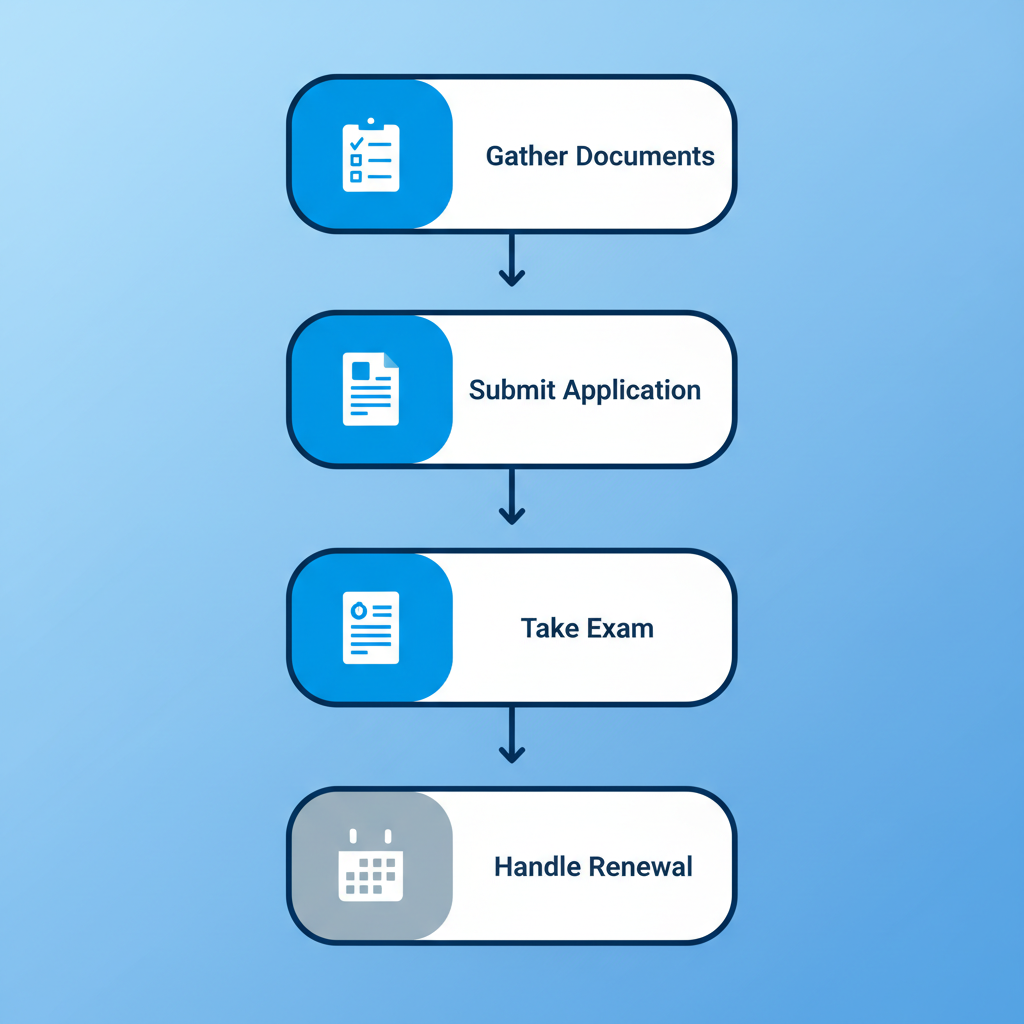
Step-by-step guide to obtaining a contractor license in Colorado
Visualizing the overall flow reinforces the importance of timely scheduling, bridging you toward licensure with our support.
Post-Exam Licensing and Renewal
Passing the exam triggers the final issuance of your license, usually within 2-4 weeks via DORA’s portal. Step 1: Submit your exam scores and fees (around $150) for official approval. Step 2: Receive your license number, which activates your ability to bid on projects legally. For specialties like plumbing or electrical, additional endorsements follow similar timelines but may require separate exams.
Ongoing compliance is crucial; licenses renew every three years, with DORA requiring 24 hours of continuing education. We caution that delays in renewal can lead to fines, so track deadlines using the state’s renewal portal. Our industry events and training keep you updated, ensuring long-term adherence. The total process often takes 2-6 months, directly addressing how long does it take to get a contractor’s license while highlighting where can I take the contractor license exam through our accessible prep options.
By following this process, you’ll join Colorado’s Trusted Construction Community, empowered by our resources for sustained success.
Effective Strategies for License Exam Success
At Contractors of Colorado, we understand the importance of thorough preparation for contractor license exams in Colorado. Our focus on proven exam success tactics ensures aspiring contractors meet the Colorado contractor license requirements while leveraging resources like ICC F13 exam study material. By following structured Colorado licensing prep strategies, candidates can boost their pass rates and join Colorado’s Trusted Construction Community.
Building a Study Plan with ICC F13 Materials
Developing a solid study plan is essential for navigating the complexities of the ICC F13 exam. We recommend a 4-6 week timeline to cover key topics such as building codes and safety standards, aligning with DPO regulations for licensing. This approach allows time for deep comprehension without overwhelming daily schedules.
Key strategies include:
- Assess your baseline knowledge with a diagnostic test from ICC F13 exam study material, identifying weak areas like structural integrity or electrical systems.
- Allocate daily sessions: 2 hours on core reading, 1 hour on code interpretation, and 30 minutes reviewing notes.
- Incorporate weekly milestones, such as completing one module per week, to track progress and adjust as needed.
For example, a contractor preparing for specialties in residential construction might prioritize F13 sections on framing and roofing over the first three weeks. This methodical implementation, supported by official ICC resources, mirrors the validated study methods from NAHB credential programs, where structured timelines lead to higher retention and exam performance. Post-plan, verify readiness through self-assessments to ensure compliance with state standards.
Practice Techniques and Common Pitfalls
Effective practice transforms theoretical knowledge into practical application for the contractor license exam. Focus on mock exams using ICC F13 exam study material to simulate real testing conditions, emphasizing timed responses and code application scenarios. This builds confidence and highlights areas for refinement.
Implementation tips:
- Schedule full-length practice tests bi-weekly, reviewing incorrect answers to understand reasoning behind code violations.
- Use active recall methods, like flashcards for F13 definitions, to reinforce memory during short daily reviews.
- Join study groups for discussing complex pitfalls, such as underestimating the depth of energy efficiency codes.
Common errors include neglecting updates to Colorado contractor license requirements or rushing through calculations. For instance, many candidates overlook ventilation standards in F13 materials, leading to point deductions. By addressing these proactively–perhaps through targeted drills on past exam questions–we help avoid such traps, drawing from DPO’s emphasis on regulatory adherence for successful licensing.
Integrating School Programs for Best Results
Structured programs amplify personal study efforts, providing expert guidance for optimal results in Colorado licensing prep strategies. At our contractor license school in Colorado, we offer comprehensive support through in-person and online sessions tailored to ICC F13 challenges, enhancing pass rates as seen in NAHB’s credential success stories.
To integrate effectively:
- Compare self-study vs. guided approaches: Self-study offers flexibility but risks gaps in coverage; guided programs like ours provide instructor feedback and peer accountability, increasing retention by up to 30% based on industry benchmarks.
- Enroll in a contractor certification course early to align with your 4-6 week plan, covering specialties such as plumbing or HVAC.
- Blend resources: Use school lectures for tough F13 topics, then apply them in personal practice.
For example, a participant in our program might attend weekly webinars on code updates, followed by group mock exams. This hybrid method not only addresses pitfalls like misinterpreting DPO standards but also fosters networking within For Contractors, by Contractors. Ready to elevate your preparation? Contact us today to access these proven resources and schedule your exam with confidence.
Your Path to Contractor Licensing Success
Embarking on your path to certification as a licensed contractor in Colorado requires understanding the Colorado contractor license requirements and preparing effectively with resources like ICC F13 exam study material. At Contractors of Colorado, we guide you through this journey, from initial applications to mastering the essentials. Our contractor license school in Colorado simplifies the process, helping you navigate state regulations set by the Department of Regulatory Agencies (DORA). We’ve supported thousands in achieving compliance, ensuring they meet verification standards for business paperwork, insurance, and licenses.
The benefits of our structured preparation are clear: save valuable time on studying while positioning your business for growth in Colorado’s Trusted Construction Community. Consider Mike, a local builder who joined our program last year. Through targeted exam prep, he passed on his first try, expanded his operations, and now thrives in our verified network. This path not only accelerates your success but also builds long-term credibility.
Ready to take the final licensing steps? Enroll in our license school today and access comprehensive support. We offer ongoing contractor support services, including renewal reminders via DORA guidelines–verify details at official state resources. Join our 24K+ members, ‘For Contractors, by Contractors,’ and transform your career. Start now for a brighter future in construction.