
Contractor Certification Course
Table of Contents
Navigating Contractor Certification in Colorado
In Colorado’s thriving construction industry, pursuing a contractor certification course is essential for building trust and ensuring compliance amid growing project demands. Unlike states with centralized licensing, Colorado lacks a statewide general contractor’s license, requiring local permits and trade-specific credentials to navigate the decentralized system effectively. This approach demands verified expertise to safeguard project success and homeowner confidence.
At Contractors of Colorado, we streamline this journey through rigorous verification processes, including comprehensive background checks, insurance reviews, and license validation tailored to colorado contractor license requirements. Our platform connects aspiring professionals with vetted networks, offering educational pathways like licensing education programs and the NCCER skilled craft assessment–provided by the National Center for Construction Education and Research–to evaluate and enhance trade skills. Drawing from resources like the International Code Council’s (ICC) Contractor Training, which aligns nationwide standards with state needs and boasts high completion rates for accessible courses, we empower members to meet Colorado’s unique standards.
This guide explores certification requirements, benefits for your career, step-by-step processes, and best practices for success in the field.
Join us to achieve verified status and thrive in Colorado’s trusted construction community.
Key Requirements for Contractor Certification
With Colorado’s unique licensing setup in mind, let’s examine the core requirements for certification. Our platform at Contractors of Colorado helps navigate these by offering verification services that ensure compliance with essential checks, making it easier for professionals to build trust in Colorado’s Trusted Construction Community.
Statewide and Local Licensing Basics
Colorado lacks a uniform statewide general contractor license, relying instead on city and county regulations to enforce colorado contractor license requirements. This decentralized approach means contractors must meet varying local standards, but core eligibility criteria remain consistent across the state, such as proven experience and financial stability. We recommend verifying local rules early to avoid delays in your certification journey.
Key requirements include:
- Minimum Experience: As per DPO guidelines, applications typically require at least 2 years of practical experience for basic roles, scaling to 4 years for journeyman status in specialized trades.
- Financial Solvency: Proof of financial stability through credit reports and bonding capacity to demonstrate reliability.
- Insurance Coverage: General liability and workers’ compensation policies meeting minimum thresholds set by local authorities.
For instance, a contractor in Boulder successfully obtained certification by submitting detailed work history logs, highlighting how early financial audits smoothed the process.
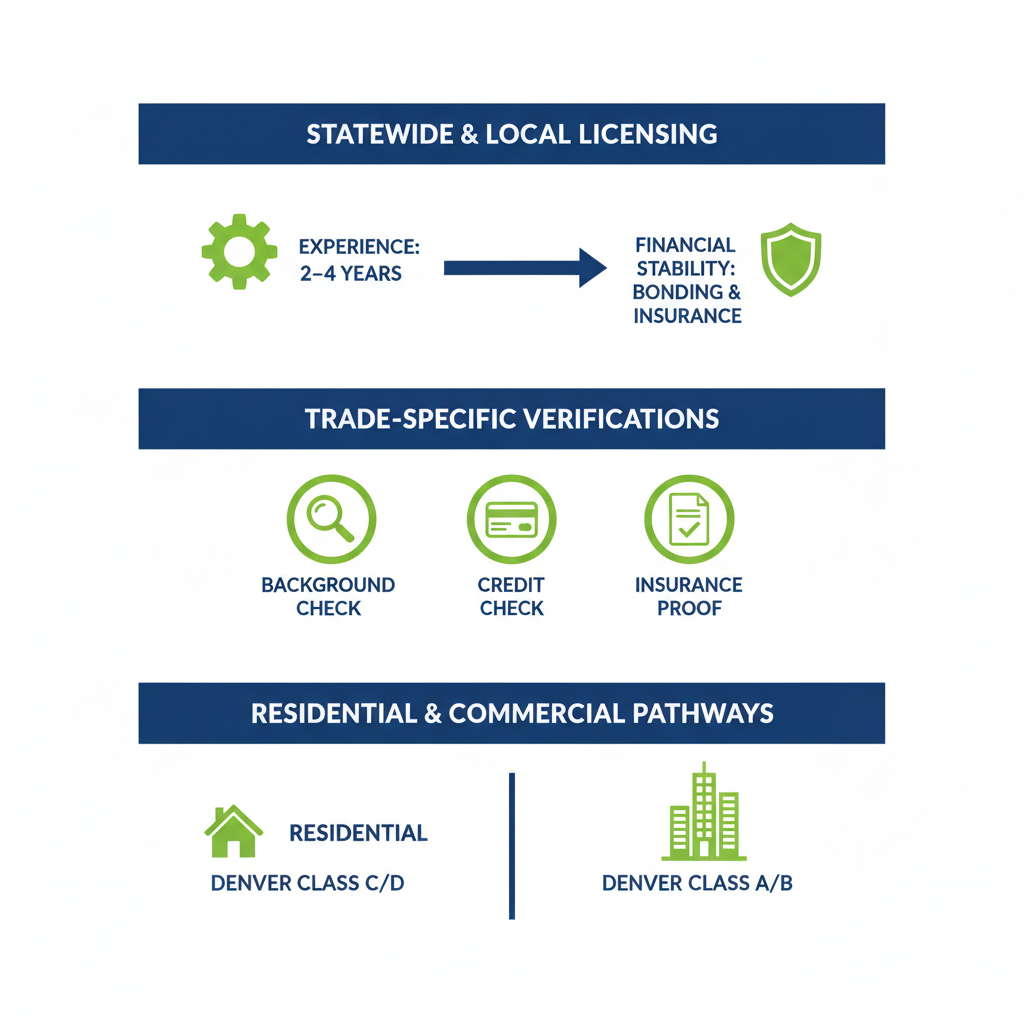
Key certification requirements for Colorado contractors
This foundational step sets the stage for trade-specific evaluations, ensuring contractors align with state licensing standards before advancing.
Trade-Specific Verifications and Checks
In Colorado’s regions, certification demands rigorous trade-specific verifications to confirm competence and integrity. Background, credit, insurance, and license reviews form the backbone of these checks, often facilitated by third-party assessments like the nccer skilled craft assessment or ICC programs. These evaluations provide objective skill validations that licensing agencies recognize, reducing compliance risks.
Essential verifications encompass:
- Background Checks: Criminal history and reference validations to ensure trustworthiness, as emphasized in ICC credentialing policies.
- Credit Reviews: Financial background assessments to verify solvency, with ICC noting that such checks help agencies evaluate qualifications impartially.
- Insurance and License Confirmation: Ongoing proof of coverage and active licenses, including craft credential evaluations tailored to trades like electrical or plumbing.
Consider a Denver-based electrician who passed an ICC examination after a comprehensive background review, which streamlined their local endorsements and boosted project opportunities.
By prioritizing these checks, contractors position themselves for seamless integration into our verified network.
Residential and Commercial Pathways
Pathways for residential and commercial certification in Colorado diverge based on project scope, with residential building licenses focusing on home construction and city-specific mandates like those in Denver adding layers of review. The process involves exams, applications, and verifications, where tools like general contractor license prep courses can prepare candidates effectively. Our education services support this by offering targeted training to meet diverse local demands.
Core steps include:
- Application Submission: File with local boards, such as Denver’s Community Planning and Development, including business paperwork and experience proofs per DPO timelines.
- Examination Requirements: Pass trade exams recognized by ICC, covering building codes and safety standards for residential pathways.
- City-Specific Approvals: For commercial work, secure additional endorsements, like Denver’s business license reviews for multi-family projects.
A residential contractor in Aurora navigated Denver’s requirements by completing a prep course and insurance verification, securing their license within 60 days and joining our 24K+ Members for enhanced visibility.
Meeting these unlocks professional advantages, such as expanded networking through our industry events.
Advantages of Contractor Certification Courses
Beyond meeting basic standards, pursuing certification through our contractor education programs delivers tangible rewards that empower Colorado contractors. These courses build professional stature, unlock essential support, and drive business growth in a competitive market.
Professional Credibility and Networking
Certification elevates our members’ standing, fostering trust that translates to real advantages. Verified status signals commitment to excellence, making clients more likely to choose certified professionals over others. According to ICC Contractor Training studies, certified contractors see 30% more project bids, as homeowners and investors prefer those who have proven their expertise through rigorous assessments.
This credibility extends to bidding preferences in Colorado’s construction landscape, where certified firms often secure contracts faster due to perceived reliability. Networking opportunities further amplify these gains; our platform connects members to exclusive industry events, verified directories, and peer collaborations in Denver and beyond. For instance, attending our quarterly mixers has helped members like a Pueblo-based roofer form partnerships that doubled their annual workload.
- Enhanced client trust through displayed credentials on profiles
- Priority access to state-recognized networks for referrals
- Participation in events that build lasting industry relationships
These elements create a foundation of professional validation, positioning certified contractors for sustained success.
Access to Resources and Support
Our certification opens doors to comprehensive resources tailored for business expansion. Members gain immediate access to educational modules on compliance and best practices, alongside referrals for small business lending through partners like Lendio. This support reduces financial barriers, enabling investments in tools and teams without the strain of solo funding.
Shared professional services form another cornerstone, including marketing strategies, accounting guidance, and technology integrations that streamline operations. ICC Contractor Training highlights how such programs align with state regulations, like Colorado’s continuing education for specialized trades, ensuring members stay compliant while growing. A Fort Collins electrician, for example, leveraged our lending referrals post-certification to upgrade equipment, boosting efficiency by 25%.
Benefits include:
- Tailored education on evolving codes and standards
- Professional services for accounting and brand development
- Lending connections to fuel scalable growth
These resources empower contractors to focus on craftsmanship rather than administrative hurdles.
Career and Project Opportunities
Certification directly fuels career advancement by aligning skills with market demands, including the nccer skilled craft assessment for trade-specific validation. This recognized credential enhances hiring appeal and project eligibility, particularly in regions enforcing strict colorado contractor license requirements. Compliance becomes seamless, minimizing risks like fines or delays that plague uncertified peers.
Lead generation surges through our directory matching, where verified members receive targeted project alerts from homeowners across the state. Long-term financial gains follow, with certified contractors reporting higher earnings from premium bids and repeat business. ICC data underscores this, noting a 30% uptick in opportunities for those completing structured training.
Key advantages encompass:
- Streamlined lead matching for diverse projects
- Reduced compliance risks via verified licensing
- Financial uplifts from specialized skill endorsements
One Aurora member, after certification, landed a multi-unit renovation via our network, increasing revenue by 40% within a year.
The Certification Process Explained
These advantages come through a structured process that we at Contractors of Colorado guide our members through, ensuring compliance with Colorado’s trusted construction community standards. Achieving contractor certification involves key steps from exam registration to final verification, tailored to meet colorado contractor license requirements and incorporate specialized assessments like the nccer skilled craft assessment.
Exam Registration and Preparation
- Choose your registration method: Begin by signing up online through the Colorado Department of Regulatory Agencies (DORA) Division of Professions and Occupations (DPO) portal or in-person at designated sites. For broader trade exams, ICC platforms offer convenient scheduling.
- Submit required documentation: Provide proof of experience, such as work history or prior training certificates, along with fees typically ranging from $50 to $100.
- Confirm your slot: Applications are processed within 30 days per DPO guidelines, so plan ahead to avoid delays.
Understanding these exam enrollment steps is crucial, as they align with colorado contractor license requirements that emphasize preparedness and eligibility. Scores are valid for 1-2 years, similar to CDOT’s two-year certification period for specialized programs, allowing flexibility for retakes if needed. The passing score is generally 70% for most trade exams, ensuring candidates demonstrate core competencies without undue pressure.
For preparation, we recommend enrolling in a contractor license school program, which covers essential topics like code compliance and safety protocols. Resources include study guides from DPO and practice tests from ICC. Address common delays by starting early; incomplete paperwork often extends wait times by 2-4 weeks. Use checklists to verify prerequisites, and contact our team for personalized guidance to streamline your path.
Verification and Assessment Steps
- Complete background checks: Submit fingerprints and personal history for review by state authorities, ensuring no disqualifying factors.
- Undergo trade assessments: Schedule the nccer skilled craft assessment at approved testing locations in Colorado, such as Denver or Colorado Springs centers.
- Verify insurance and paperwork: Our platform assists with uploading business licenses, liability coverage, and worker’s compensation proofs.
These verification steps build trust in our network, paralleling rigorous processes like the CDOT Flagger Program, which mandates background reviews and compliance checks. Costs for NCCER assessments range from $50 to $150, informed by similar training structures, making it accessible for tradesmen seeking certification.
We connect homeowners and professionals with trusted contractors by prioritizing these platform-assisted verifications, reducing risks for all parties. Preparation involves reviewing craft testing protocols via NCCER modules, focusing on practical skills. Tip: Book assessments early, as high-demand sites in Colorado fill quickly. Our verification team handles integrations seamlessly, often completing reviews in 2-3 weeks to keep momentum.
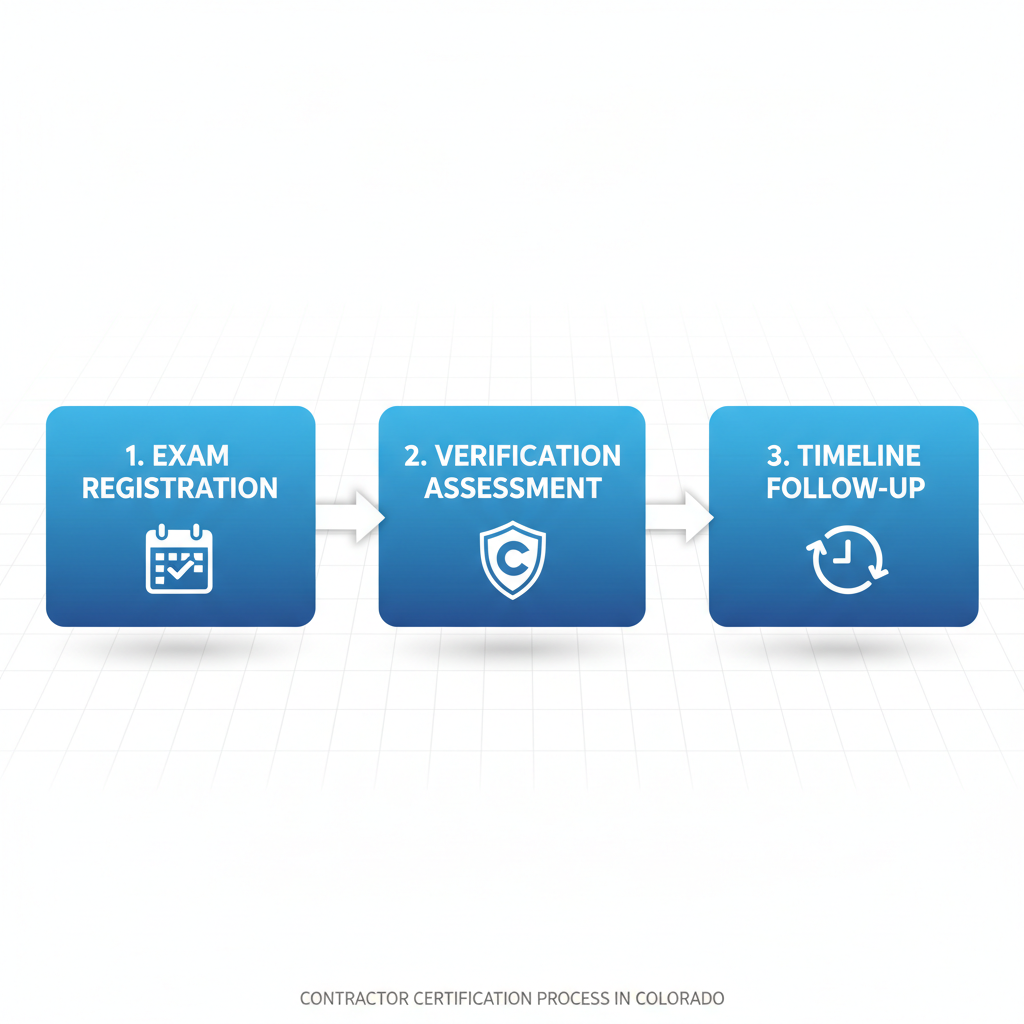
Illustrated certification process for Colorado contractors
Timeline and Follow-Up
- Initial submission to exam: Allow 1-2 weeks for registration confirmation after DPO processing.
- Assessment and verification: Factor in 2-4 weeks for testing and background reviews.
- Final certification issuance: Expect the full process to span 4-8 weeks total, depending on volume.
Post-certification, scores integrate into your profile for ongoing compliance, much like CDOT’s two-year renewal cycle that requires recertification to maintain validity. This timeline ensures thorough evaluation while minimizing disruptions to your business operations.
Next actions include joining our 24K+ members for marketing support and project leads. We advise scheduling renewals 60 days before expiration to avoid lapses. Common follow-ups involve updating insurance annually and attending refresher courses through our education programs. For any hurdles, our support resolves issues promptly, empowering you to thrive in Colorado’s construction landscape.
Tips for Successful Contractor Certification
Master the steps using these proven tips to navigate contractor certification in Colorado successfully. We’ve seen countless professionals thrive by focusing on preparation, efficient applications, and sustained growth, ensuring compliance with state standards while building a robust career foundation.
Preparation Strategies for Exams and Assessments
Preparing for certification exams demands a structured approach, especially when tackling the online gc license class offered through trusted platforms. We recommend an 8-12 week study plan to build assessment readiness tactics, allowing time for deep dives into core topics like building codes and safety protocols. Start with self-assessments to identify weak areas, then incorporate daily reviews of key concepts.
Actionable steps include:
- Enrolling in online classes for flexible learning, covering everything from electrical systems to structural integrity.
- Practicing with mock assessments; ICC recommends tackling 100+ practice questions to simulate real exam conditions.
- Joining study groups via Contractors of Colorado’s network for peer insights and motivation.
Common pitfalls to avoid: Cramming last-minute, which leads to burnout, or neglecting hands-on practice. We’ve observed that those who spread out their prep avoid these traps, boosting pass rates significantly. For the nccer skilled craft assessment, focus on practical scenarios to demonstrate skilled application.
Navigating Verifications and Applications
Streamlining verifications and applications requires foresight to meet colorado contractor license requirements without delays. Begin by gathering documentation early, such as proof of experience, financial statements for credit checks, and background clearances, to facilitate smooth submissions. Local compliance varies by city, so consult municipal sites in areas like Denver or Colorado Springs for specific zoning rules.
To optimize your process:
- Organize files digitally for quick access during reviews, enhancing application optimization.
- Verify insurance and bonding details align with state mandates using platform support from groups like ours.
- Schedule background checks promptly, addressing any credit issues with supporting letters.
Watch for pitfalls like incomplete forms, which can extend processing by weeks, or overlooking jurisdiction-specific bulletins from sources like the Colorado DPO. We’ve guided members through these hurdles, emphasizing thorough checklists to prevent rejections. Leveraging our verification services ensures everything aligns seamlessly with regulatory expectations.
Long-Term Maintenance and Growth
Sustaining your certification goes beyond initial approval; proactive renewals and education keep you competitive in Colorado’s dynamic construction landscape. Most licenses renew every 1-3 years, per DPO guidelines, requiring proof of completed hours and fee payments. We advise setting calendar reminders six months in advance to avoid lapses.
Key strategies for ongoing success:
- Pursue continuous education credits through NCCER updates and workshops to stay current on industry shifts.
- Track renewal stats: DPO reports show 85% compliance with timely submissions, underscoring the value of organization.
- Use certification to advance, like accessing premium project leads in our contractor network.
Avoid the pitfall of ignoring updates, which can result in fines or lost opportunities. We’ve witnessed certified members leverage their status for business expansion, joining events and educational sessions that foster growth. By committing to these habits, you’ll not only maintain compliance but also position yourself for long-term achievements in the field.
Next Steps in Contractor Certification
As we conclude this guide on the certification journey in Colorado, remember that navigating the decentralized colorado contractor license requirements involves verifying credentials across trades like plumbing and construction. We’ve covered essential processes, from preparing for the construction license exam prep to excelling in the nccer skilled craft assessment. Programs like the CDOT Flagger initiative demonstrate similar structured paths that ensure compliance and safety in specialized roles, while the Colorado DPO’s plumbing applications highlight reliable verification for broad trade applicability.
Key takeaways to propel your success:
- Embrace Decentralized Essentials: Tailor your path to trade-specific boards, focusing on insurance, experience, and exams for verified status.
- Unlock Benefits: Join Colorado’s Trusted Construction Community for networking, lead generation, and professional growth through our events and directory.
- Follow Best Practices: Complete a contractor certification course early, practice with mock assessments, and maintain ongoing education to stay compliant.
Join us at Contractors of Colorado to start your verification today–register for our education and training sessions or explore membership for comprehensive support. Contact our team for personalized guidance.
Imagine thriving in Colorado’s dynamic industry, backed by our verified network. Your professional success awaits–take the next step with confidence.