
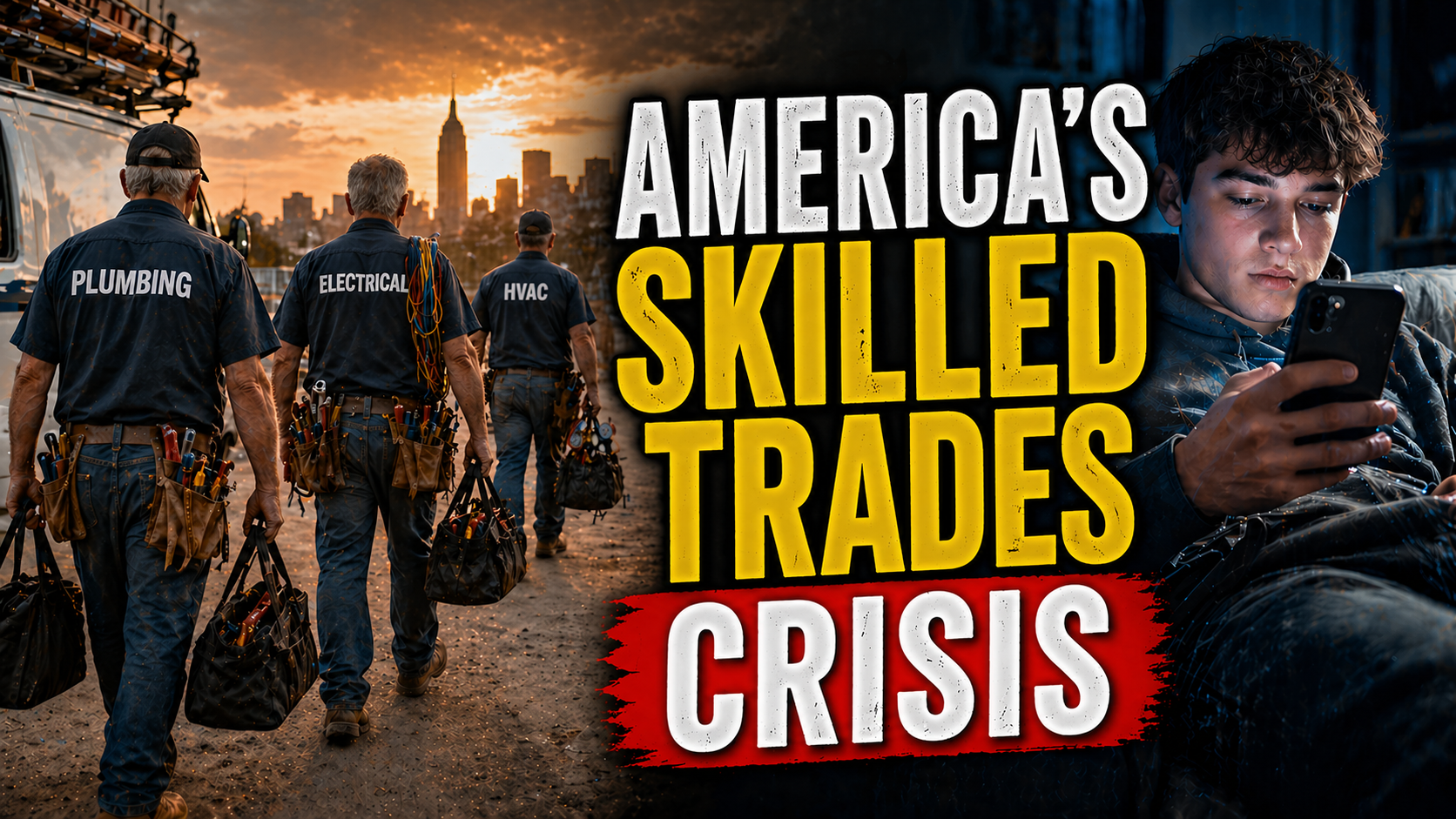
I’m going to try to put into words what many in the trades and increasingly homeowners, businesses, and communities are feeling. The following is my opinion, shaped by direct conversations with hundreds of trade professionals and countless hours of research.
America systematically dismantled its pathway into the skilled trades and now we’re all paying for it. Unfortunately, the clock is ticking faster and faster.
I am not a plumber. I am not an electrician or an HVAC tech. I don’t show up to job sites with a tool belt. But I spend every single day talking to the people who do. Hundreds of them, across Colorado and what I hear from them has convinced me of something I think most of America hasn’t fully reckoned with yet.
We have a serious and structural crisis unfolding in the skilled trades. And if we don’t address it deliberately everyone is going to feel it in their wallets, in their wait times, and in the basic functioning of the homes and businesses we all depend on.
I help run Contractors of Colorado.
Our mission is to build a real, professional, grassroots community for trade professionals from the ambitious 19-year-old who just picked up their first set of tools, to the seasoned pro running a multi-million dollar operation and looking to scale further. We are investing in business support, education, and the long-term health of the trades as an industry. We want to be a home base for people who build things, fix things, and keep this country running.
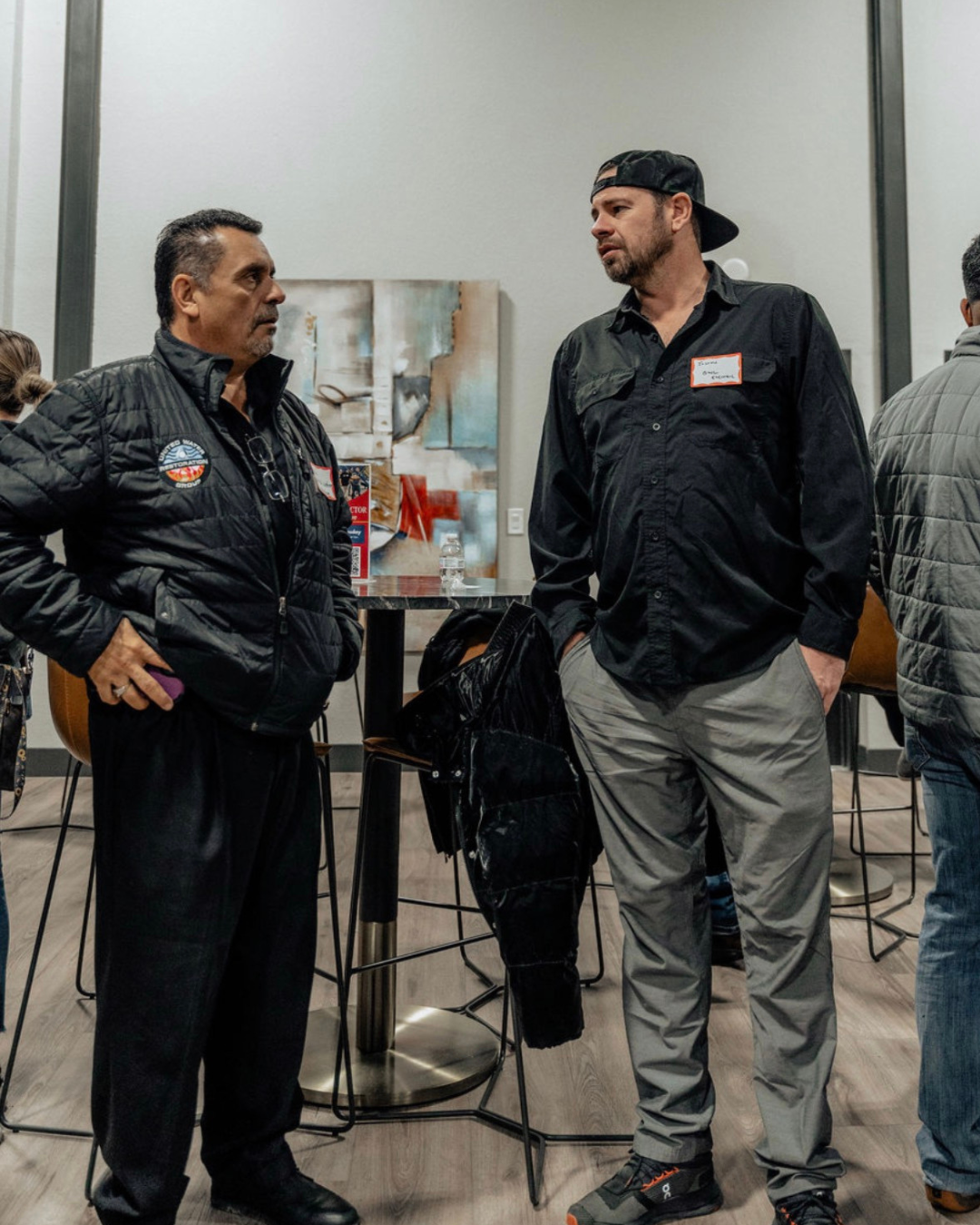
That mission puts me right at the intersection of everything that is both broken and full of potential in this world. And the more time I spend in it, the more convinced I am that we need to talk honestly about three forces that are colliding right now, because understanding all three is the only way we start building real solutions.
I. WE TOLD AN ENTIRE GENERATION THAT BLUE COLLAR MEANT SECOND CLASS
Go back to the late 1990s and early 2000s. If you were a high school student with your life ahead of you, there was one message coming from virtually every direction: your school counselor, your parents, the culture at large: go to college. Four years. A degree. That was the ticket.
Shop class? Vocational programs? Those were quietly defunded, deprioritized, and in many schools, eliminated altogether. The message was clear: working with your hands was a fallback, not a calling. It was what you did if you couldn’t cut it academically.
That wasn’t just wrong. It was costly. And we’ve been living with the consequences ever since.
It’s also intellectually lazy to now turn around and blame Gen Z and Millennials for “not wanting to work” or “not going into the trades.” The same generations being criticized today were raised, counseled, and educated by systems and institutions that systematically steered them away from these careers in the first place. We told them explicitly and implicitly that success lived somewhere else. And now we’re surprised they listened? Come on.
I talk to electricians who out-earn attorneys. We work with plumbers who own multiple trucks, employ a dozen people, and have built genuinely thriving businesses from nothing. The skilled trades offer something the knowledge economy increasingly cannot: work that can’t be offshored, can’t be easily automated, and will always be in demand as long as people live in buildings with wiring and running water.
No algorithm is fixing a busted water main anytime soon.
We systematically stripped out the educational infrastructure that could have guided curious, hands-on learners into these careers. Middle school shop class, gone. High school vocational tracks, gutted. Trade-focused guidance counseling, almost nonexistent. In its place, we built a one-size-fits-all funnel into four-year universities, saddled millions with debt, and called it progress. Now, in a twist no one seems eager to acknowledge, many of those same degree pathways are being disrupted by automation and artificial intelligence.
The professionals I work with every day build extraordinary careers through apprenticeships and hands-on training, paths that are often faster, more affordable, and directly tied to meaningful, well-compensated work. A multi-year HVAC or electrical apprenticeship is typically earn-while-you-learn, often debt-free, and leads to a career with strong long-term earning potential. Meanwhile, a generation of college graduates is carrying six-figure student loan balances for degrees with uncertain returns.
We need to acknowledge this mistake honestly and fix it deliberately.
That starts early. Middle school early. Before students have made up their minds about who they are, we need to reintroduce them to the idea that building, fixing, and working with your hands is not a fallback, it’s a viable, respected, and often lucrative path.
It means high school counselors who are just as equipped to talk about apprenticeships as they are about college admissions. It means rebuilding real vocational pathways. And it means changing the cultural narrative.
Choosing a trade should not come with an asterisk. It should stand on its own, as an equally valid, equally respected path to a successful life.
II. THE BABY BOOMERS ARE LEAVING THE BUILDING
Layer onto that cultural failure a demographic reality that is arriving whether we are ready or not: the Baby Boomer generation is retiring, or more crudely, dying off… Electricians. Plumbers. HVAC technicians. Ironworkers. Carpenters. The backbone of America.
That means an enormous amount of institutional knowledge, hard-won experience, and sheer workforce volume is walking out the door simultaneously, across every trade.
This country is not prepared for it.
What does that mean in practice? It means wait times for skilled tradespeople are going to get longer. It means the work that keeps our homes functional, our businesses operational, and our infrastructure sound is going to get harder to execute and more expensive to complete.
You cannot manufacture an experienced tradesperson in three months. It often takes years of work, mentorship, and accumulated job knowledge. The tradespeople I meet who are at the top of their craft spent decades getting there. That expertise does not transfer automatically, it has to be passed down, through apprenticeships and mentorship and real on-the-job training. The pipeline for that knowledge transfer is alarmingly thin.
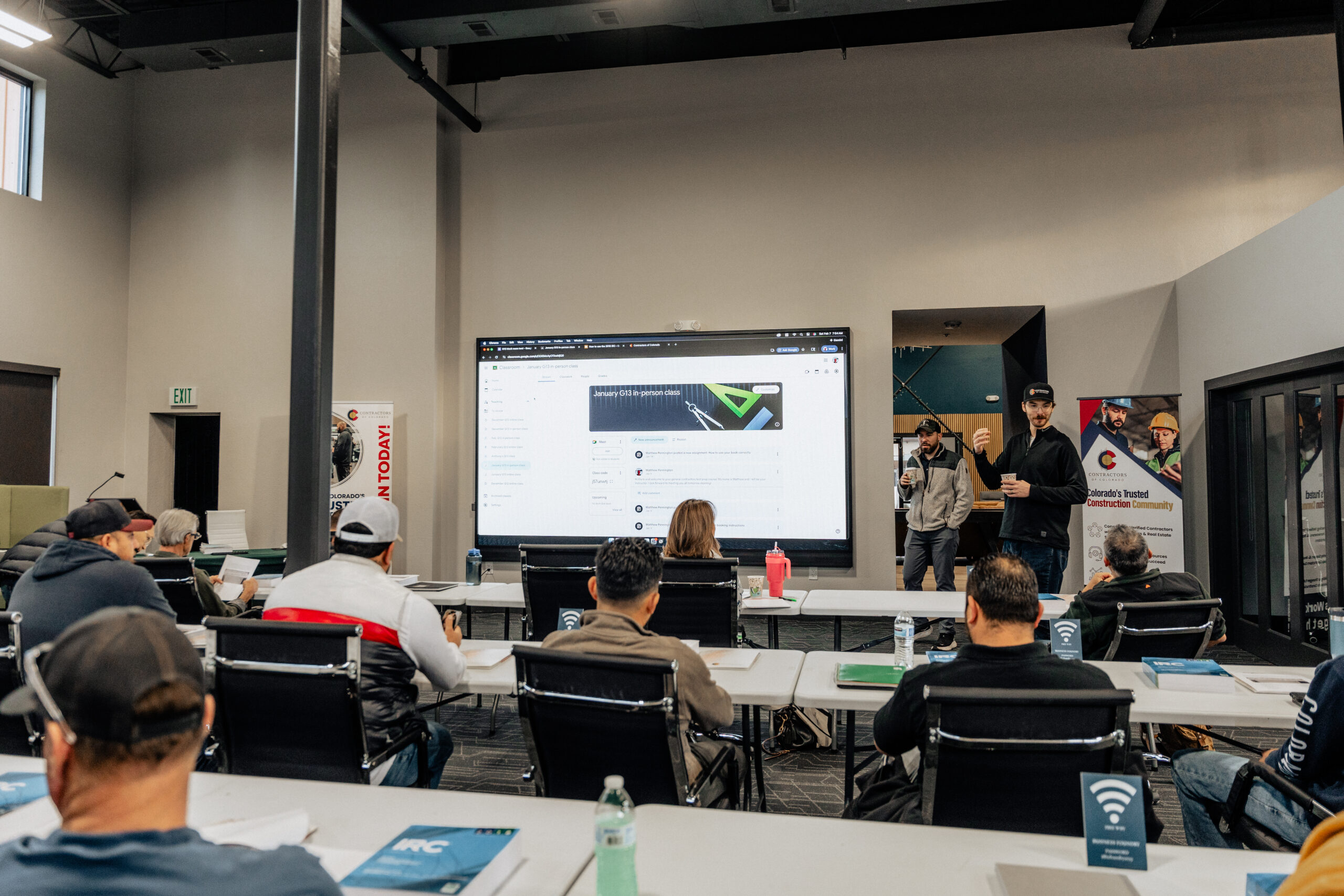
At Contractors of Colorado, part of what we are building is exactly that connective tissue, ways for experienced professionals to share what they know, and ways for newer entrants to get access to mentorship, education, professional relationship building, and the kind of “street smart” business knowledge that turns a skilled tradesperson into a thriving business owner. The industry needs that infrastructure. It has not had it at scale.
III. PRIVATE EQUITY MOVED IN. YOUR SERVICE BILL MOVED UP.
Here is the third piece and it may be the one you have felt most directly in your own wallet.
Over the past decade and a half, Wall Street backed private equity has discovered the trades and home services. This is called “Smart Money”, which means institutionally backed. $5,000,000 is a rounding error on their balance sheet. Think Blackstone, Apollo Global Management, etc.
Starting most aggressively in HVAC, then moving into electrical, plumbing, and beyond, large investment-backed roll-up operations have been systematically acquiring local and regional service companies across the country. The pitch to sellers is often compelling: a nice exit, massive liquidity, a transition out of the grind of ownership. And hey, it’s hard to turn that down if someone comes knocking on your door with a check. I support capitalism and entrepreneurship, but I do believe it needs guardrails. Have we not learned our lesson in this country? (2008 housing crisis anyone??)
The consequences for consumers and for the culture of the trades themselves are significant.
When a private equity firm acquires a local HVAC company, it is not buying it to run the same business for the same prices. It is buying it to consolidate, to reduce competition, and to expand margins. That means higher service call fees. Higher installation costs. Maintenance contracts designed to lock you in. Pressure on technicians to upsell the community.
I hear about this constantly from the contractors I work with. The hometown shop that a community trusted for decades gets absorbed into a regional conglomerate. The technician who used to know your name gets replaced by a scheduling app and a call center script. And the bill goes up.
Do we really think PE-backed trade and home service companies are going to build anything remotely soul-fulfilling? Hell no. Quality? Meh, maybe some. Prices? Raise em!!
This dynamic is being supercharged by the supply shortage we are already discussing. When there are not enough skilled tradespeople to go around, large consolidated companies with deep pockets can outbid smaller independents for talent, further squeezing local competition, further reducing choices for consumers, further driving up prices. It is a self-reinforcing cycle and the only real structural antidote is dramatically increasing the number of skilled trade professionals in the workforce.
More workers means more competition. More competition means better pricing and better service for everyone. The trades have a supply problem, and private equity is filling the vacuum that problem creates. The answer is not to demonize capital, it is to build the supply side of this equation with the same energy and intentionality. We also need to encourage and foster local ownership. Buy local, spend local, invest local.
That is part of what Contractors of Colorado is about. Strong, independent, professional trade businesses with the support, education, and community infrastructure to compete and grow on their own terms, which is good for consumers and good for the industry. The antidote to consolidation is a thriving ecosystem of skilled, well-supported independent professionals. That is what we are building.
IV. SO WHAT DO WE ACTUALLY DO?
I do believe this is fixable. But it will require real commitment from educators, from policymakers, from parents, from consumers, from community leaders, and from the trades industry itself.
Start early. I mean middle school early. Before students have made up their minds about their future, introduce them to the trades “not as a backup plan, but as a genuine, respected pathway to a skilled and well-compensated career. Let kids discover they are good at building & fixing things before anyone tells them what that is supposed to mean about their worth or their future.
Build real alternatives to the four-year degree. Increase investment in vocational high schools, trade-focused charter schools, expanded community college programs with direct pathways to apprenticeships and certifications. We need the institutional architecture to match that reality.
Change the conversation. Parents, school counselors, community leaders, we all carry some responsibility here. A licensed electrician is not a consolation prize. It is a respected, intellectually demanding, financially rewarding career. We need to say that clearly, repeatedly, and without hedging.
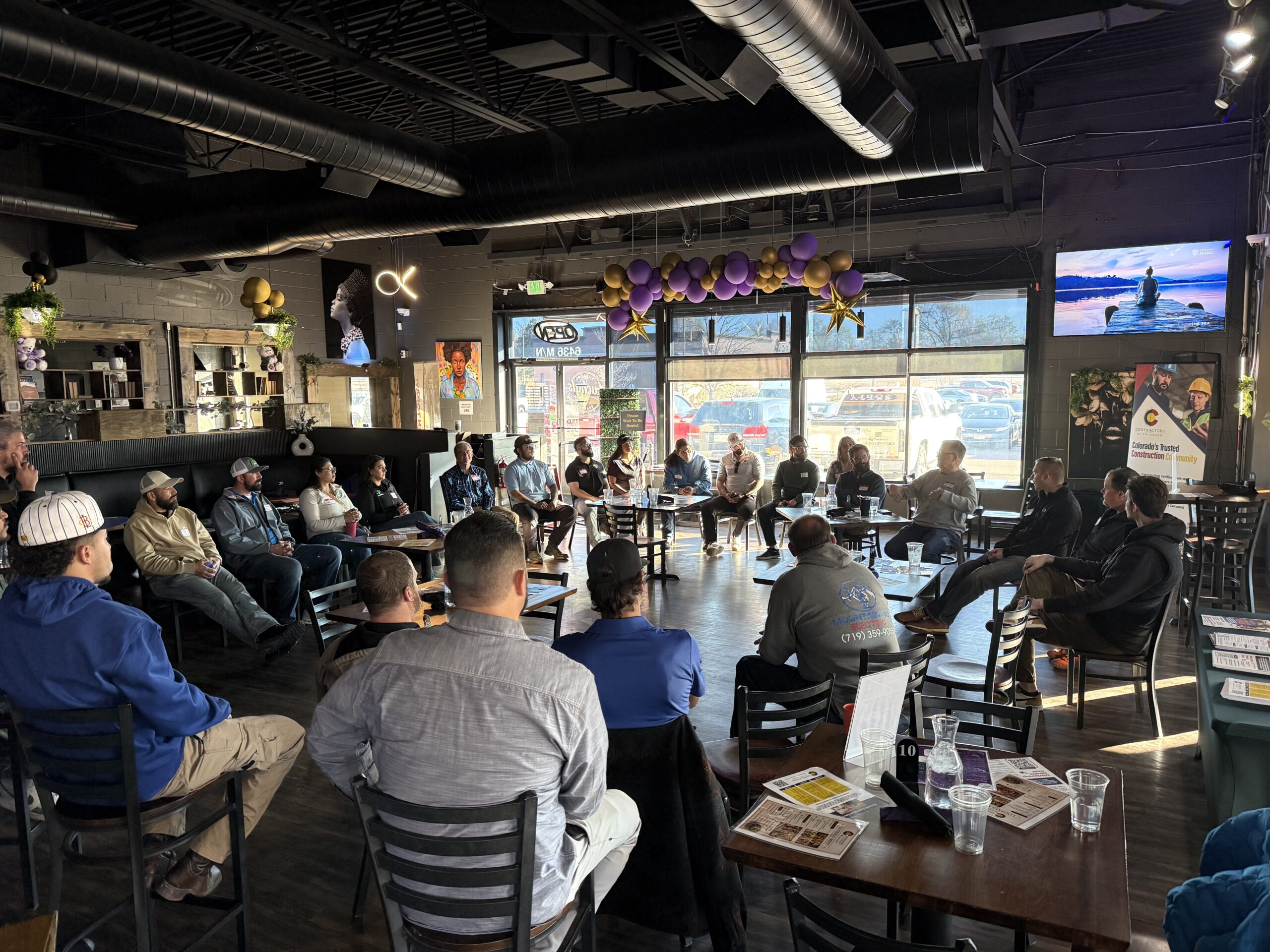
Invest in the trades as a professional ecosystem. This is where I put my own energy every day. The trades need what every other professional industry has: community, business education, mentorship networks, resources for growth, and a sense of shared identity and pride. That is what we are building at Contractors of Colorado, a home base for trade professionals at every stage, from the curious 19-year-old figuring out their path, to the experienced contractor ready to build a multi-million dollar business. The talent is there. It always has been. What has been missing is the infrastructure around it.
Please consider becoming a supporting Member of Contractors of Colorado!
The people I work with in the trades are some of the most skilled, driven, and underappreciated professionals in this country. They build and maintain the physical world the rest of us depend on. They deserve an industry that invests in their future the way they have invested in their craft.
Kids are sitting in classrooms right now, stacking up student loan debt, bored out of their minds or glued to whatever’s trending, with hands that were meant to build something real. All they need is someone to rip the cover off a door that’s been hidden from them for thirty years.
We are working on opening it and inviting everyone in.